Run assets with context
Agents read live telemetry against the asset model, explain what is happening and guide the fix.
- Designed to improve
- Mean time to repair
- Availability
- First-time fix
Agentic spatial intelligence
Al Bayan connects your operational data to a live model of your venue, destination or asset. AI agents then guide visitors, support crews and flag issues, in Arabic or English, with the source behind every answer.
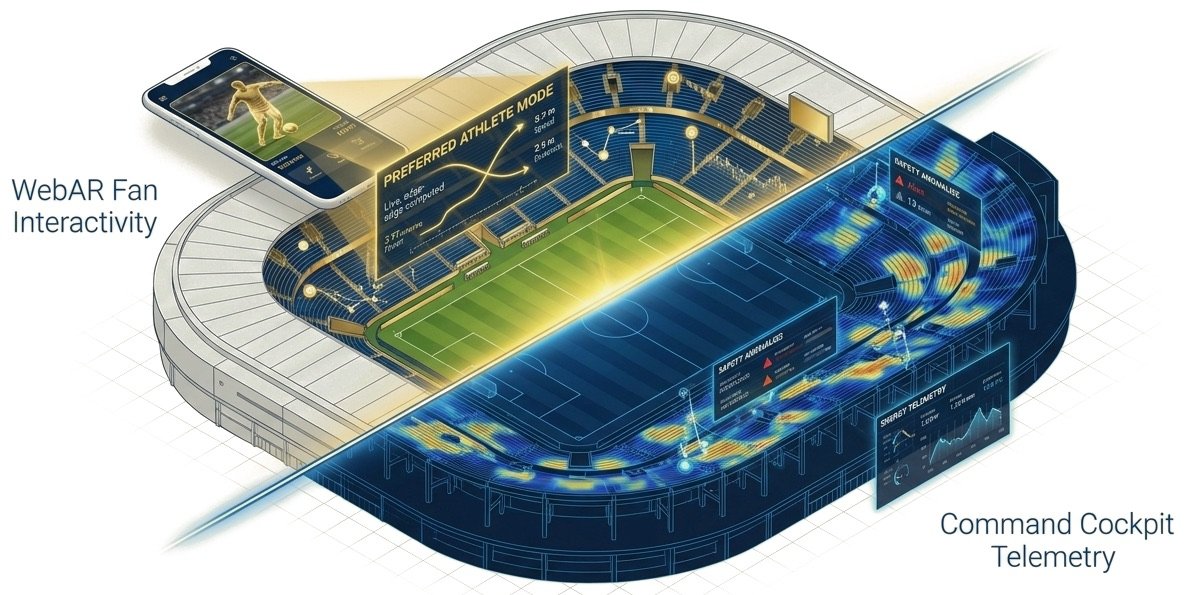
One venue model, seen by two audiences. Illustrative.
The problem we solve
Sensor feeds, maintenance logs, CAD drawings, ticketing and CCTV usually sit in separate systems. When something goes wrong, people spend time finding the right screen before they can act.
Visitors face the same gap: a venue knows a lot, but the guest standing at Gate 7 gets little of it.
Three outcomes
Agents read live telemetry against the asset model, explain what is happening and guide the fix.
VR and mixed-reality scenarios with an AI coach that scores competence and adapts the next exercise.
A persistent venue twin, a multilingual concierge and AR wayfinding that keep working when the doors close.
Outcomes describe what each capability is designed to improve. Customer results are published only when measured and approved.
Solutions
For stadium operators, clubs and leagues
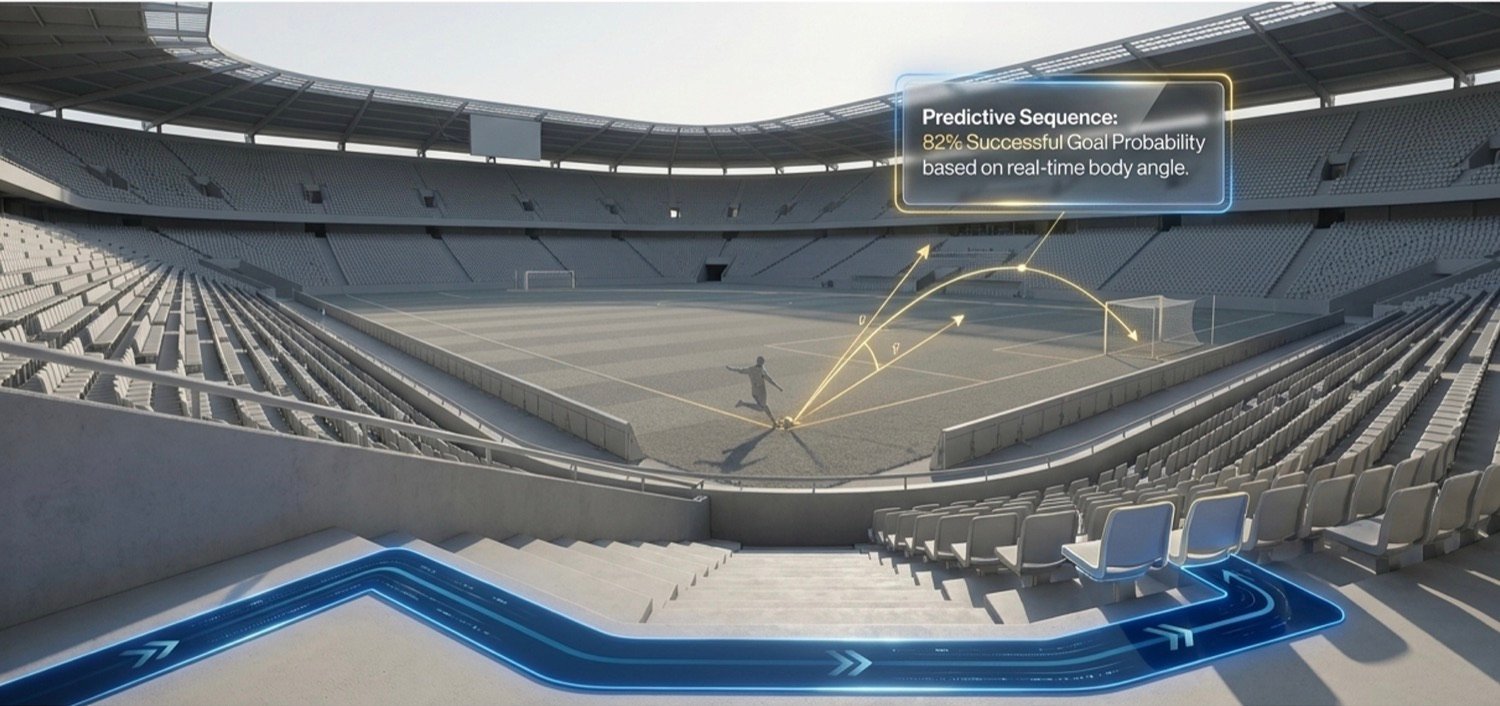
Fans get a companion on their phone or headset that knows where they are in the stadium: the shortest queue, the nearest exit, replays and stats in Arabic or English. Operators see the same venue as a live model with crowd density, gate throughput and incidents on one screen, and an agent that suggests the next action.
For destination developers and tourism authorities
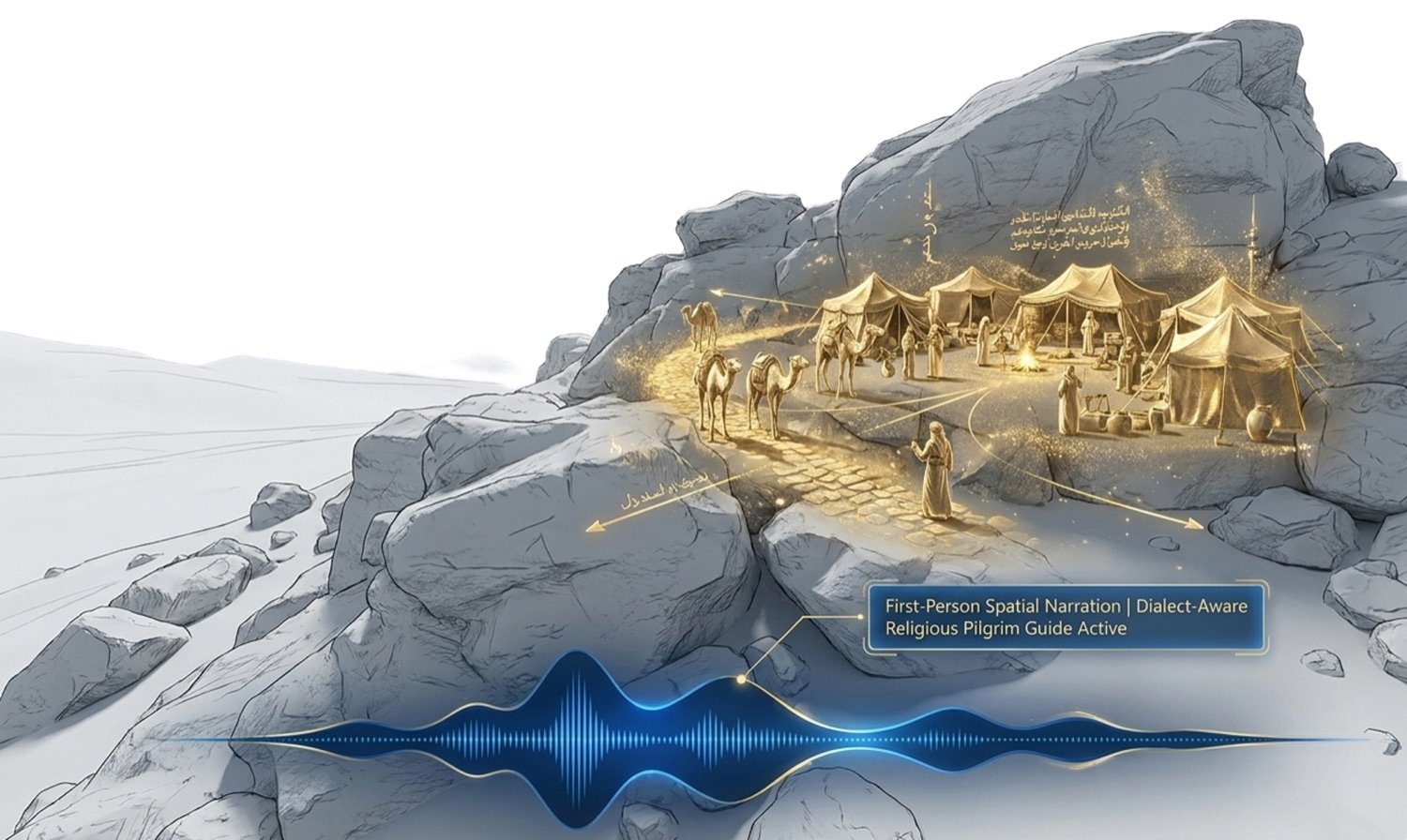
A destination twin holds the routes, attractions, schedules and services of a place. Visitors ask Dalil what to see next, how to get there and what a site means, and AR overlays tell its story on location. Operators see visitor flow across the destination and can rebalance staff and transport before queues form.
For organizers, exhibitors and venue owners
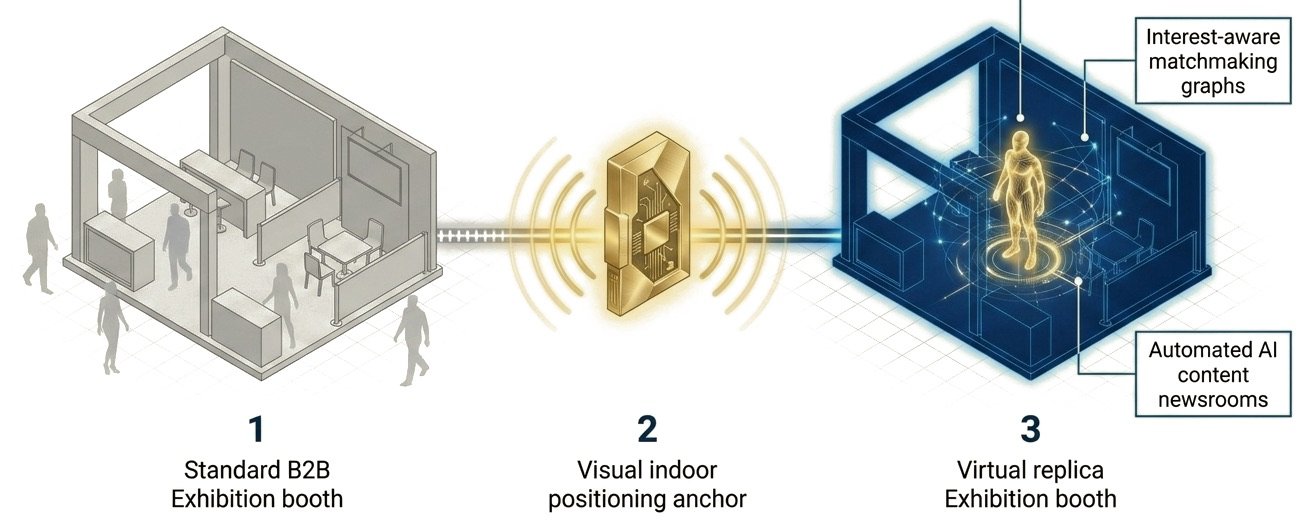
An event twin guides attendees to the right hall, session or meeting, helps exhibitors capture and qualify leads, and gives organizers a live view of crowd flow. The twin stays online after the event, so content, connections and leads keep their value.
For developers, sales teams and community operators
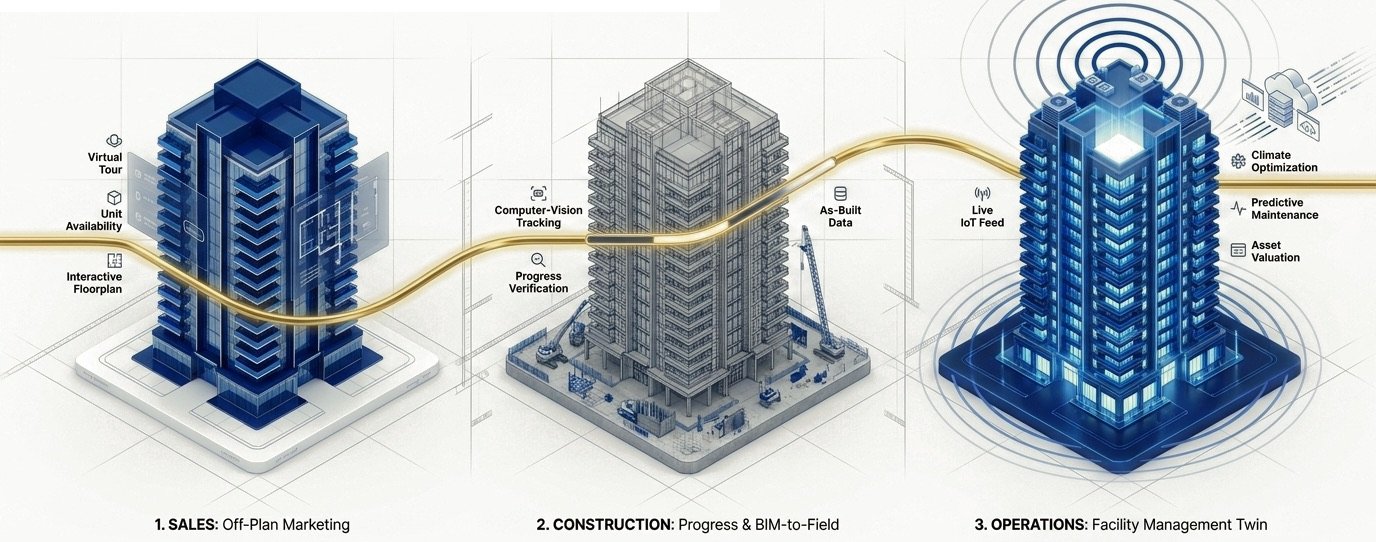
Off-plan buyers can explore a unit and its community in 3D, configure finishes, and ask Dalil about specifications, payment plans and delivery dates, with answers drawn from approved project documents. After handover, the same model becomes the community's operations twin for facilities management.
For asset owners, maintenance and plant managers
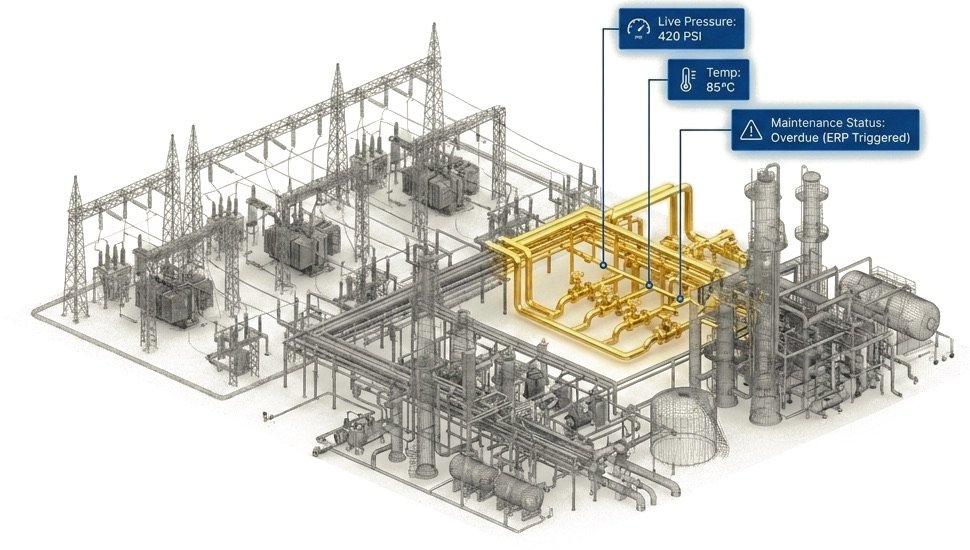
Tadbir binds telemetry, maintenance history and manuals to each asset in the model. When an alarm fires, an agent explains the likely cause, points the technician to the right location and walks them through the procedure on a tablet or headset. Supervisors approve work that the policy engine marks as sensitive.
For HR, academies and safety leads
Trainees rehearse high-risk tasks in VR or mixed reality built from the real site model. An AI coach watches, scores competence against the procedure and changes the next scenario to target weak points. Managers see who is ready, by skill and site.

Platform
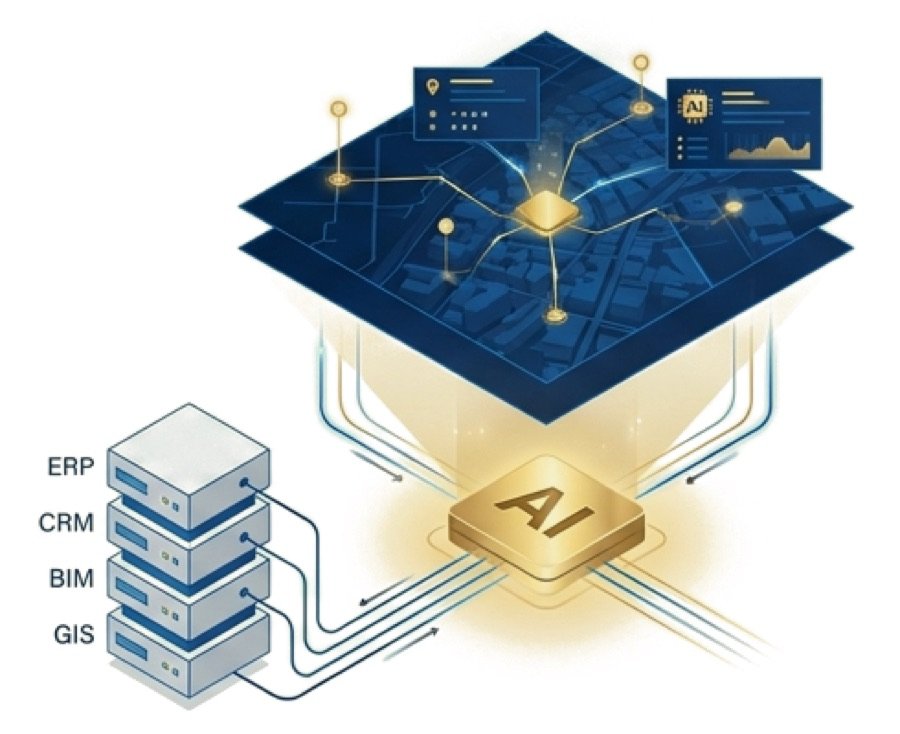
Most organizations already own the data they need: drawings, sensor feeds, maintenance records, ticketing and CCTV. Basira binds that data to a live spatial model of the place, so AI agents can reason about where things are, what state they are in and what should happen next. Mashhad and Tadbir put that intelligence in front of visitors and operators. Dalil is the voice they both hear.
The persona visitors and staff talk to. Arabic and English, with sources.
Experience suite: visitor journeys, concierge, AR wayfinding, configurators.
Operations suite: asset twins, field guidance, maintenance, training, cockpits.
Data from existing systems enters once through connectors; every agent reuses that one model.
Dalil دليل
Dalil answers in Arabic or English and switches between them mid-conversation. It shows where each answer came from: a sensor reading, a maintenance record, a published schedule.
When it is unsure, or the action is sensitive, it hands over to a person.
Which gate has the shortest queue right now?
Gate 9. It is a four-minute walk from where you are, and the queue is shorter than at Gate 7.
Source: gate throughput feedومتى تبدأ المباراة؟
تبدأ المباراة الساعة 8:00 مساءً.
المصدر: الجدول المنشورCan you open the staff entrance for me?
That needs a person to approve it. I have passed your request to the duty supervisor.
Handed to a person · loggedWhere we work on the ladder
A model you can look at. No live data.
An accurate model with asset data, updated by hand.
Live data flows from the place into the model, one way.
Data flows both ways, and the model can inform action in the place.
Models predict failures, crowding or demand from the twin's data.
AI agents use the twin to explain, recommend and act within set policies, with people in control.
Why Al Bayan
Experience budgets and operations budgets usually buy separate systems, each with its own integration, its own 3D model and its own vendor. Al Bayan builds the spatial model and the data connections once. The marketing team uses it to engage visitors; the operations team uses it to run the place. Both see the same truth.
Basira's scene graph and connectors serve Mashhad and Tadbir, so the second use case costs far less than the first.
Dalil shows the source behind each answer and hands sensitive decisions to a person. That makes it usable in safety, finance and government settings where an unsourced chatbot is not.
Visitors, staff and officials can switch language mid-conversation. Arabic is designed in from the start rather than translated later.
Every deployment starts with a baseline and a target in the KPI engine, and pilots end with a scale or stop decision against that target.
Data residency, PDPL and national data-management standards shape the architecture from day one.
How we engage
We map your data sources, systems and stakeholders, agree the outcome and its baseline, and leave you with a pilot scope and an architecture you can review.
We connect the agreed data to deploy one use case at one site, and measure it against the target. The pilot ends with a written scale or stop recommendation.
More use cases on the same model, more sites, or both. Each addition reuses the connectors and scene graph already built.
Platform subscription with managed service options, quarterly KPI reviews, and new agent skills as your needs change.
Engagements combine a one-time discovery and implementation fee with an annual platform subscription; managed services are optional.
Our mission
To give every venue, destination and asset an intelligent guide that helps people see what is happening, understand why, and act with confidence.
FAQ
It combines a live digital model of a physical place with AI agents that can reason about it. The agents explain what is happening, recommend what to do and, within set rules, take action, with people approving anything sensitive.
A digital twin keeps a model in sync with the real place. Al Bayan adds agents that use the twin to answer questions and guide work, and an experience layer that puts the same model in front of visitors.
No. We connect to the systems you already run, such as building models, sensors, maintenance software and ticketing, and read from them through connectors.
In local jurisdiction by default.
The agent answers from approved sources, cites them, and says when it does not know. Sensitive actions need a person's approval, and every decision is logged.
A typical pilot covers one site and one use case over a fixed period agreed in discovery, on average 3 to 4 months.
Yes. Both suites run on the same core, so a later use case reuses the model and data connections already built.
Book a discovery session
We will come back with how a discovery would run for your site: the data we would look at, who needs to be in the room, and what you would hold at the end of it.